

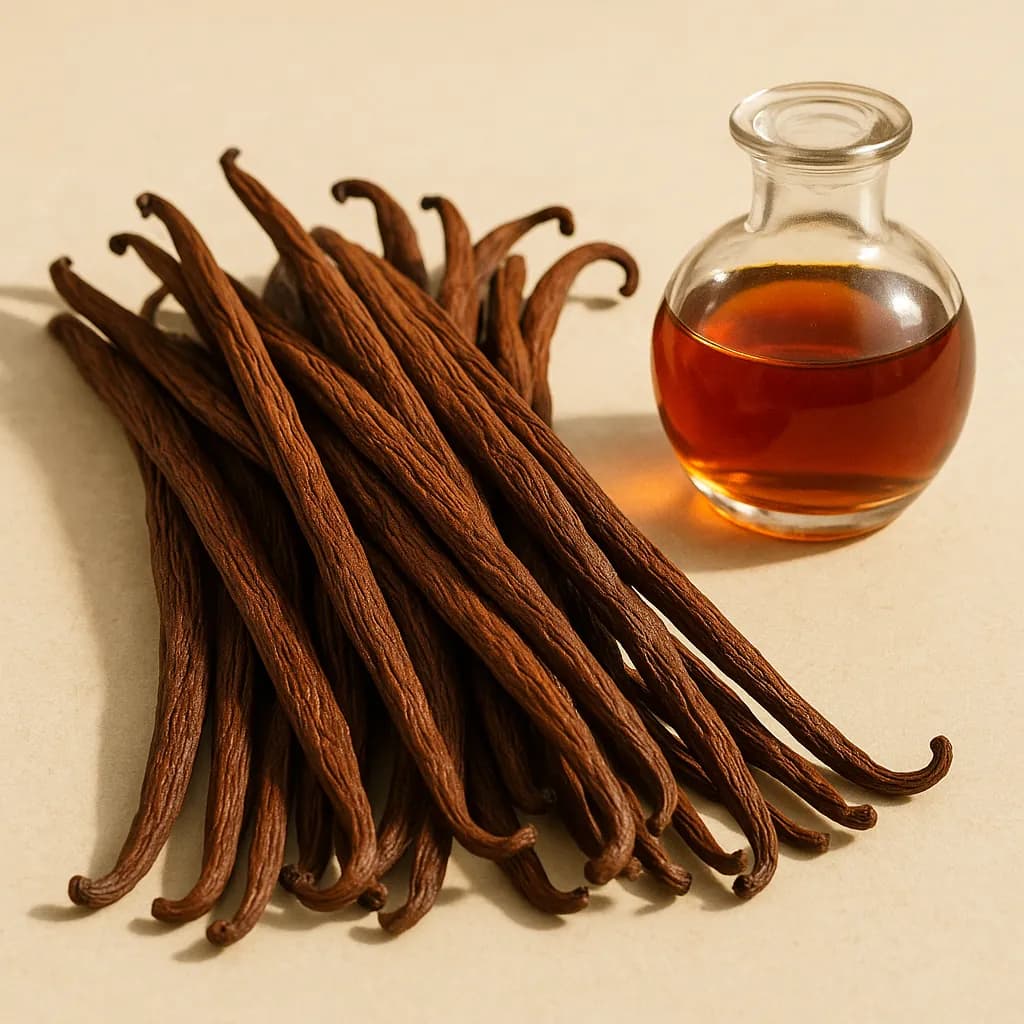
Before buying vanilla powder, confirm its ingredients, whether its source beans have already been extracted, and the function it must perform in your product. Put those answers beside the sample ID and quoted material. The name “vanilla powder” alone does not give you enough information to compare offers.
What does the supplier mean by vanilla powder?
A powder may be ground vanilla beans or a preparation containing vanilla flavour and another ingredient. Ask for the complete ingredient declaration and a description of the material being offered. Do not turn a product name into an assumption about its composition.
Singing Dog Vanilla’s powder explainer describes several products sold under this name, including ground beans and preparations using a non-vanilla base. That distinction belongs in your enquiry before you compare samples.
Have the beans already been extracted?
Ask whether the material was milled before or after an extraction step. Slofoodgroup’s FAQ describes previously used beans as exhausted and notes that they may still be ground. Record what the supplier means by “exhausted” rather than treating the word as a complete processing description.
If your specification requires beans that have not undergone extraction, ask the supplier to confirm that requirement in writing for the offered material. A declaration that says only “vanilla” leaves that question unanswered. A photograph cannot document processing history.
Write a material identity record
Use this record before approving a sample. Keep unknown fields open and send the specific question to the supplier; do not fill them from another product’s listing.
- Offered product name, supplier and specification revision: ______
- Declared ingredients, including any carrier or added flavour: ______
- Source material and declared origin or blend: ______
- Previous extraction: yes / no / not confirmed. Supplier explanation and document reference: ______
- Other declared processing steps and relevant specification fields: ______
- Particle-size requirement and agreed way of describing or measuring it: ______
- Sample ID, offered lot or batch, and link between them: ______
- Supplier declaration date, document reference and unanswered questions: ______
Does the sample do the job you need?
State whether you need aroma, visible particles or both. Define texture and colour acceptance separately. A sample can be acceptable for appearance while the ingredient declaration remains unresolved; keep those decisions separate in the approval record.
Test the identified sample in your intended food using your own development procedure. Record the recipe version, powder addition, preparation conditions and assessment criteria. If you change both the powder and the recipe, record both changes before attributing the result to the powder.
Set any replacement amount through that trial. This guide provides no universal conversion between powder, beans and extract. For comparing laboratory results and a received extraction lot with an approved reference, use the separate lot-comparison guide.
Which unknowns should delay approval?
- The ingredient declaration does not identify a component mentioned in the offer.
- Previous extraction remains unconfirmed when the buyer’s specification excludes it.
- The sample cannot be linked to the material named in the quote.
- The required particle-size description or application assessment is missing.
Record the unresolved field, who must answer it and the document or trial needed. Once clarified, keep the accepted specification revision with the sample decision and order. Matching a sample to an order is a separate task from deciding whether its material identity is suitable.
Request a quote for the specified material
Afri Exports lists ground vanilla powder in its catalogue, with a 25 kg minimum order. Send your ingredient requirement, extraction-history requirement, intended use, quantity, destination and required report fields. Ask the desk to confirm the offered material against those requirements; this guide does not establish a particular lot’s composition or availability.
Related reading
Leave a Comment
Your email address will not be published.