
- Grade A / gourmet — whole, supple beans at 30–35% moisture, 15–20 cm, typically assaying 1.6–2.4% vanillin; bought for retail and culinary presentation.
- Grade B / extraction — drier beans at 20–25% moisture that often deliver more vanillin per kilogram at a lower price; bought by the assay, not the looks.
- TK / red — the intermediate band between the two; exporters draw its boundary differently, so specify numbers rather than labels.
- A complete specification names six things: grade and origin, length band, moisture band, vanillin assay (HPLC), condition tolerances, packaging format.
- Match grade to end use: Grade A for retail tubes and patisserie; Grade B, short beans and splits for extract, grinding and industrial flavour.
- Every lot should ship with an independent lab report — the contract references the numbers, not the grade name.
Vanilla grading is simpler than it looks. Unlike coffee or cocoa, there is no single international standard — each origin and exporter uses slightly different labels — but underneath the vocabulary, every grading system measures the same three things: moisture content, physical condition, and aroma (which in trade terms means vanillin content). Once you know what each grade optimises for, choosing becomes a straightforward match to your end use.
Vanilla grades at a glance
- Grade A / Gourmet — whole, supple, oily beans at 30–35% moisture, dark chocolate-brown to black, 15–20 cm. Bought for appearance and culinary use as much as flavour.
- Grade B / Extraction — drier beans at 20–25% moisture, often with reddish streaks or minor blemishes. Bought for flavour per kilogram, not looks.
- TK (red) — a trade term for the intermediate band between gourmet and extraction: partially red-brown beans, drier than gourmet, sometimes split. Usually sold into extraction.
- Splits & cuts — beans that opened on the vine or during curing, and clean cut pieces from calibration. Same flavour chemistry, lowest presentation value.
- Short beans — sound whole beans under about 14 cm. Priced below full calibres, popular for grinding and extraction.
Grade A gourmet: bought with the eyes and the fingers
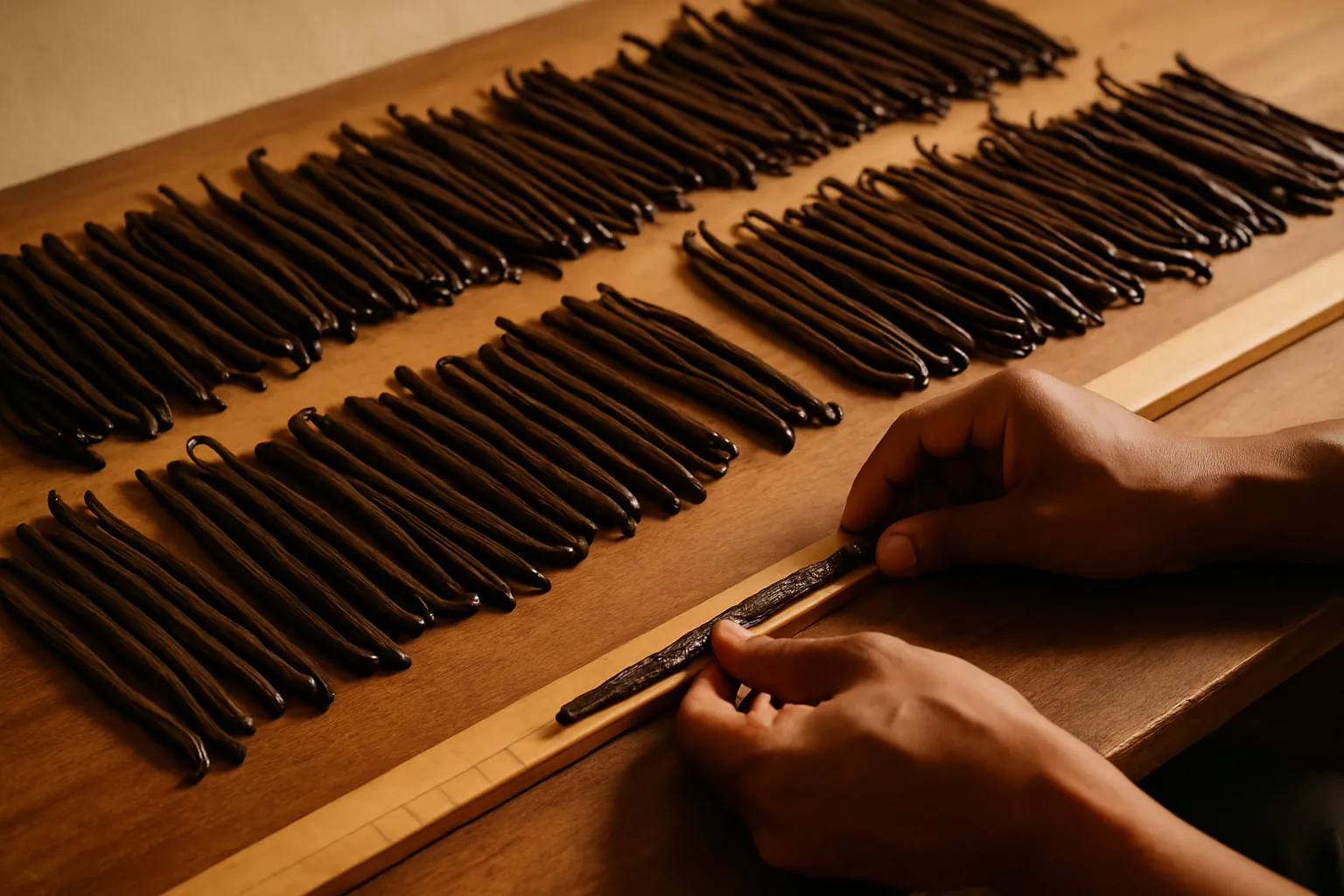
A gourmet bean is judged the way a chef judges it: it should be plump, flexible enough to wrap around a finger without cracking, visibly oily, and uniformly dark. The 30–35% moisture band is what keeps it supple. Length matters commercially — 16 to 18 cm is the standard premium calibre, and beans of 18 to 20 cm carry a further premium because they present well in retail tubes and on pastry menus. Vanillin on a good gourmet lot typically assays between 1.6 and 2.4%.
The catch with gourmet vanilla is that its moisture makes it perishable. At 30–35% water, a badly cured bean is one warm week away from mould. That is why serious suppliers vacuum-pack gourmet beans and why buyers should treat the moisture reading on the lab report as seriously as the price.
Grade B extraction: bought by the numbers
Extraction beans are drier — 20 to 25% moisture — and visually rougher: reddish streaks, surface blemishes, the occasional split. None of that matters in a maceration tank. What matters is vanillin per kilogram, and here Grade B often wins outright: because the bean carries less water, a kilogram of extraction beans can contain more flavour than a kilogram of gourmet beans, at a meaningfully lower price. Our Uganda extraction line assays at 2.0 to 2.6% vanillin — among the highest in our catalogue.
“Extract makers should never pay for beauty. A blemished bean with 2.4 per cent vanillin makes better extract, cheaper, than a flawless bean with 1.6.”
- Asha Ngonyani, Quality Manager
A note on TK and the labels in between
Between gourmet and extraction sits a band the trade calls TK or 'red' vanilla — beans that dried further than gourmet, often showing red-brown colouring, sometimes with a split tip. Different exporters draw the TK boundary in different places, which is why we advise buyers to ignore the label and specify the numbers instead: a moisture band, a vanillin range and a condition tolerance describe a bean unambiguously, whatever the exporter calls it. Everything we ship is specified that way, and the lab report — not the grade name — is what the contract references.
Matching grade to end use
- Retail single beans, glass tubes, gift packs — Grade A, longest calibre you can price.
- Patisserie, ice-cream kitchens, restaurant use — Grade A, standard 15–18 cm calibre.
- Vanilla extract, syrups, spirits infusion — Grade B; price the lot on its vanillin assay.
- Grinding into powder, dry mixes, chocolate — Grade B, short beans, or splits and cuts.
- Vanilla paste and seed-visible applications — Grade A or better Grade B; seed density matters more than skin condition.
Specifying with confidence
A complete vanilla specification names six things, so the contract lot and the delivered lot describe the same bean:
- Grade and origin — e.g. Grade A gourmet, Sava region, Madagascar.
- Length band — e.g. 16–18 cm, with an accepted tolerance.
- Moisture band — 30–35% for gourmet, 20–25% for extraction, verified by lab.
- Vanillin content — the assay range, and which laboratory method (HPLC is standard).
- Condition tolerances — splits, blemishes, cuts allowed per kilogram.
- Packaging format — vacuum-packed weight per pouch or carton.
We grade every lot against this checklist and ship the lab report with the documents, so the numbers on the contract are the numbers in the box. That consistency, lot after lot, is what makes a vanilla supplier worth keeping.
Browse our vanilla grades
- Wholesale vanilla beans supplier overview- grades, origins, MOQ and shipping in one place
- Madagascar Grade A gourmet- 16–18 cm · vanillin 1.6–2.4%
- Madagascar Grade B extraction- 14–16 cm · vanillin 1.8–2.6%
- Uganda Grade B extraction- Our highest vanillin assays
- Vanilla flavour chemistry for buyers- What vanillin does and doesn't measure
Related reading

Leave a Comment
Your email address will not be published.