
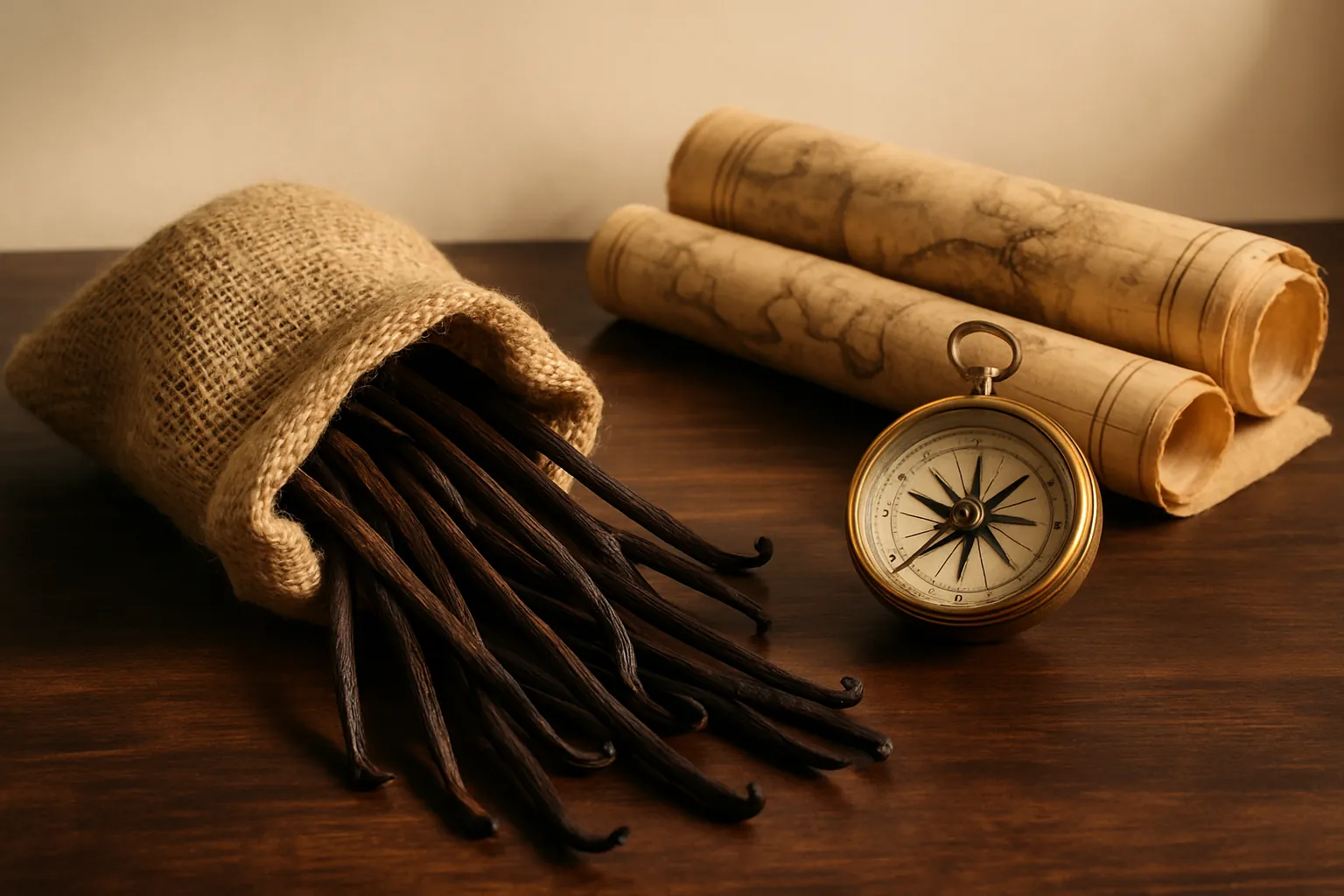
Most vanilla on the world market is blended long before it reaches an importer — beans from many farms, several curing operations and sometimes more than one country, consolidated by traders until the origin story is genuinely unknowable. The label says Madagascar; the reality might be three districts, two seasons and five curing houses. For some buyers that is acceptable. For anyone building a brand on flavour consistency or making claims on a label, it is a liability.
What single-origin actually means
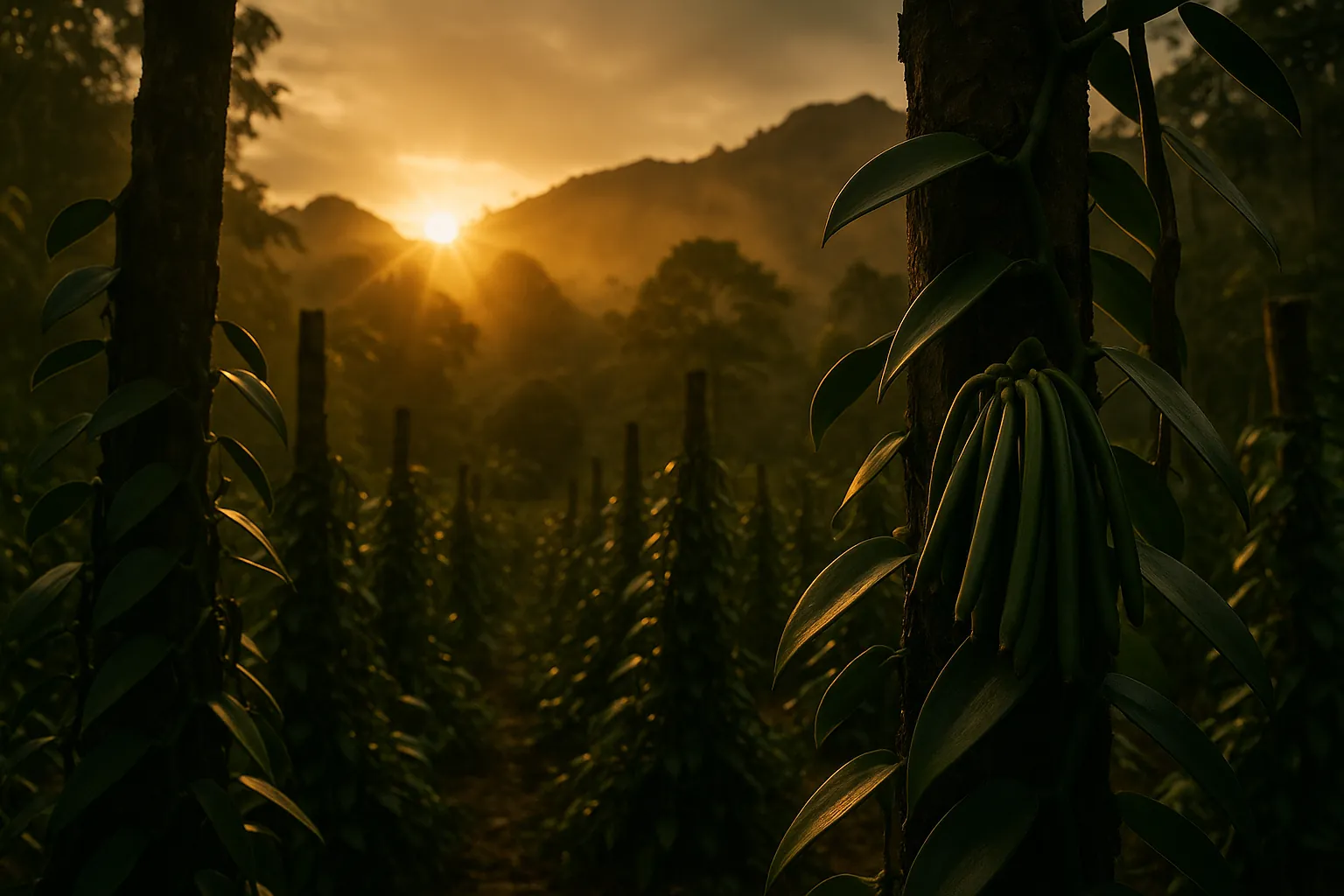
Single-origin, as we practise it, means every lot is tied to one growing district — Antalaha, Sambava or Vohémar in Madagascar's Sava region, or Bundibugyo or Mukono in Uganda — one harvest window, and one curing batch. The lot number on the carton connects to collection records, curing logs, the lab assay and the packing record. Nothing in the box is anonymous.
Flavour consistency is a traceability problem
Vanilla flavour varies by terroir and by cure. Beans from the same district, cured the same way, taste like each other; a blend assembled from whatever was available does not. If your product depends on batch-to-batch consistency — an ice-cream base, a signature extract, a fragrance accord — then buying blended vanilla means re-standardising your formulation with every delivery. Buying single-origin means the supplier has already done that work at source.
“When a buyer tells us their last supplier's beans 'changed between orders', the beans usually didn't change — the blend did.”
- Joachim Mbwana, Sourcing Lead
When something goes wrong, narrow beats wide
Quality incidents in vanilla are almost always curing incidents — a batch that was rushed through drying, a sweating cycle that ran too cool. With a blended lot, an importer who finds mould in one carton has no way to know how far the problem extends, so the whole shipment is suspect. With a single-origin lot, the lot number isolates the incident to one curing batch, one window, one set of records. The investigation takes days, not months, and the corrective action lands at the right curing house.
How lot identity works in practice
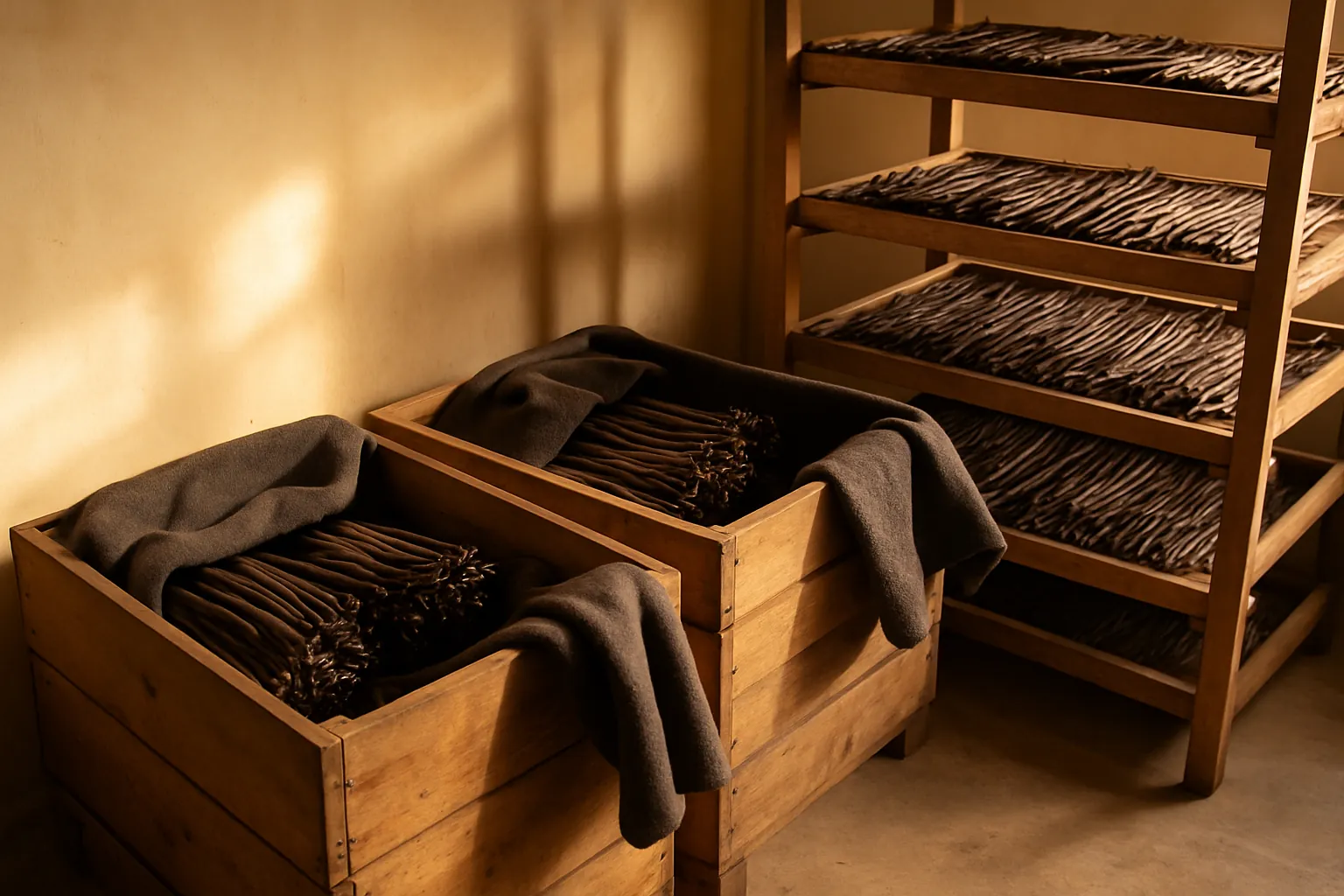
A lot, in our system, is born at collection: green pods bought from a defined grower group in a defined week are weighed, recorded and given a lot number before they enter the curing house. That number follows the beans through the kill, every sweating cycle, drying and conditioning — each stage logged with dates and the name of the curer responsible. When the lot is graded and packed, the same number goes on every carton, on the independent lab report, and on the packing list the importer receives. Ask us where lot 26-ANT-014 grew and cured, and the answer is a file, not a shrug.
This matters most at re-order time. A buyer whose first shipment performed well does not want 'more Madagascar vanilla' — they want beans from the same district, the same curing network and the same specification band. Because our records connect every lot to those variables, a repeat order is a repeat of the conditions that produced the first one, not a lottery ticket drawn from a warehouse of anonymous cartons.
What it does for your label and your audit
- Origin claims you can evidence — 'Sava region, Madagascar' backed by records, not by a trader's invoice.
- Clean answers for retailer and food-safety audits: one lot, one chain of custody, one file.
- A defensible story for premium positioning — provenance is worth nothing if it cannot be shown.
- Repeatable sensory profiles, because next season's order can come from the same district and the same curers.
- Farm-gate accountability — direct relationships mean quality feedback actually reaches the grower.
The honest trade-off
Single-origin sourcing is more work at origin — collection has to be kept separate, curing batches cannot be pooled, and documentation follows every lot individually. In a commodity-priced market that overhead is real. But vanilla is not priced like a commodity anymore; it is priced like an ingredient with a story, and buyers who can verify the story capture the premium. Our view is that the paperwork is the product.
Every bean in our catalogue — gourmet, extraction and powder — ships with its lot identity intact. Even our ground powder is milled from identified lots rather than floor sweepings, with the source lots named on the batch record. If you want to know which district your beans grew in and which week they were cured, that answer exists in writing — and if a supplier cannot give you that answer, it is worth asking what else about the lot they do not know.
Related reading

Leave a Comment
Your email address will not be published.