
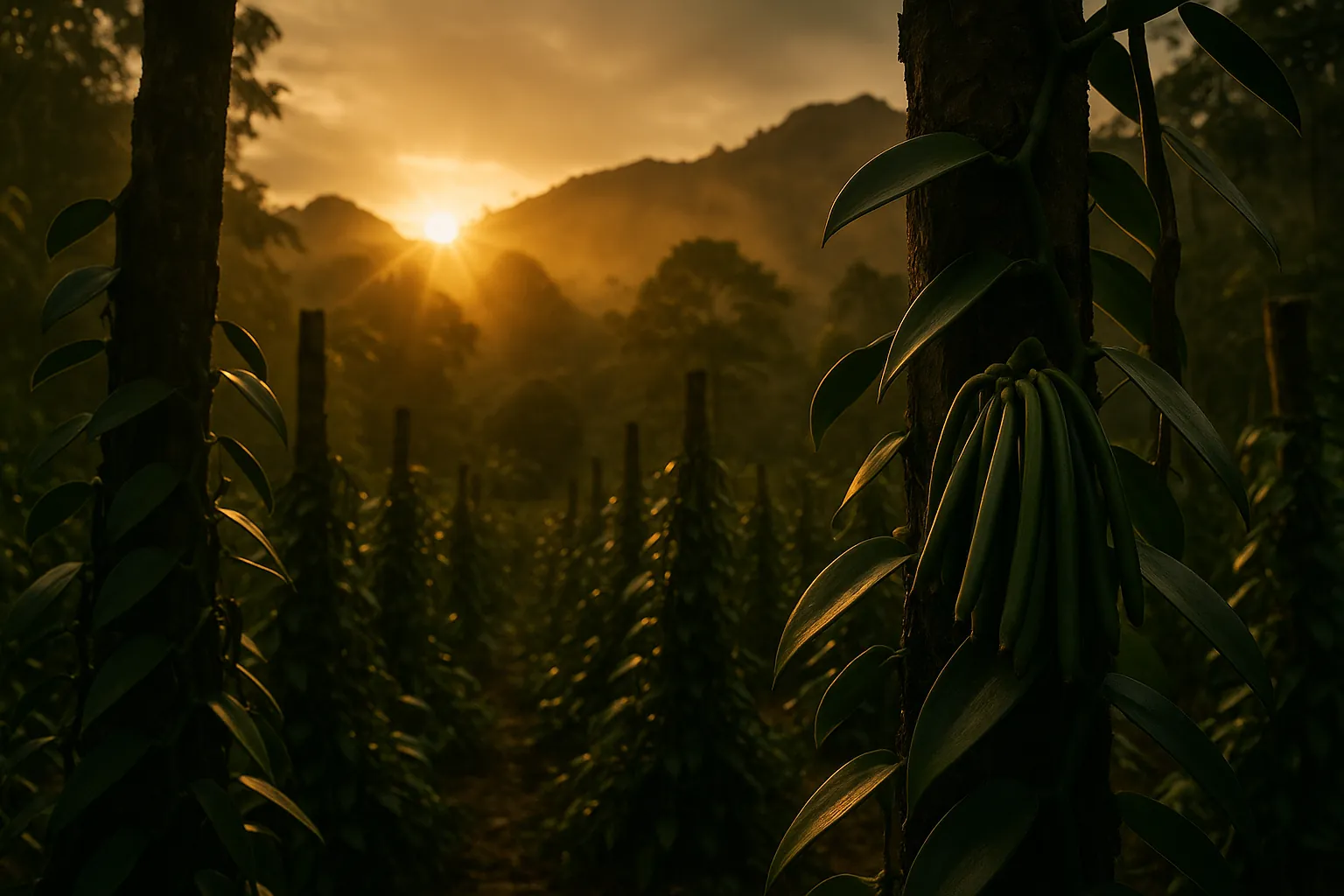

A vanilla price headline cannot tell you whether the beans suit your recipe. A Madagascar gourmet bean, a Ugandan extraction lot and a Comoros gourmet lot are different purchasing decisions. As of 28 September 2026, we do not have a verified public series that converts those differences into a current, comparable export quote. We do not publish a price list. This guide shows what to check instead of treating an undated headline as a market rate.
What a 2026 price headline cannot tell you
First ask whether the figure refers to green pods, cured beans, a small retail pack or a bulk export lot. Then check the origin and whether the grade is gourmet or extraction. Even two cured lots from the same origin may differ in length, moisture, vanillin and packing. Without a dated specification and delivery term, a comparison has no common basis.
Put the lot before the quote
- Name the actual origin. Our vanilla range is from Madagascar, Uganda and Comoros; mainland Ugandan beans must not be labelled Bourbon origin.
- Name the grade and length range. A gourmet presentation and an extraction grade solve different jobs.
- Request moisture and vanillin assays tied to the sampled lot, not a generic origin average.
- State quantity, packing, destination and mode of transport. Sea and air shipments need different named Incoterms.
- Ask when the sample was drawn and when the quote expires. Reconfirm availability before contracting.
For extraction, compare what the assay measures
A length or appearance grade does not measure flavour yield. An extraction buyer should compare the assayed vanillin and moisture of the actual cured lots and test a retained sample in the intended process. A gourmet buyer may care more about bean integrity, length and presentation. Neither buyer should infer a universal premium from the origin name alone.
What is current this September?
The confirmed buyer-calendar date is SIAL Paris on 17 to 21 October 2026. If you intend to compare samples at that event, request the lot details and shipping plan before travel. The fair date says nothing about market direction, cure readiness or our attendance. We have not independently verified a current vanilla benchmark, a 2026 harvest total or a forward allocation, so none is used here as a buying signal.
Ask for a comparable offer
Tell our export desk which origin and grade you need, the quantity, intended use and destination. We can discuss a lot-specific sample and quote against current supplier availability. Confirm the named delivery basis and mode before comparing our offer with another. The buyer's real decision is whether the offered lot passes the specification, not whether a market story sounds convincing.
Related reading
- Wholesale vanilla beans supplier overview- grades, origins, MOQ and shipping in one place
- Vanilla flavour chemistry for buyers- What the vanillin assay does and does not show
- Madagascar vs Uganda vanilla- Compare two named origins before specifying a lot
- How to import vanilla beans- Turn a price view into a first order
- Madagascar Grade A gourmet beans- Grade and packing details
- SIAL Paris official dates- 17 to 21 October 2026
Related reading

Leave a Comment
Your email address will not be published.