
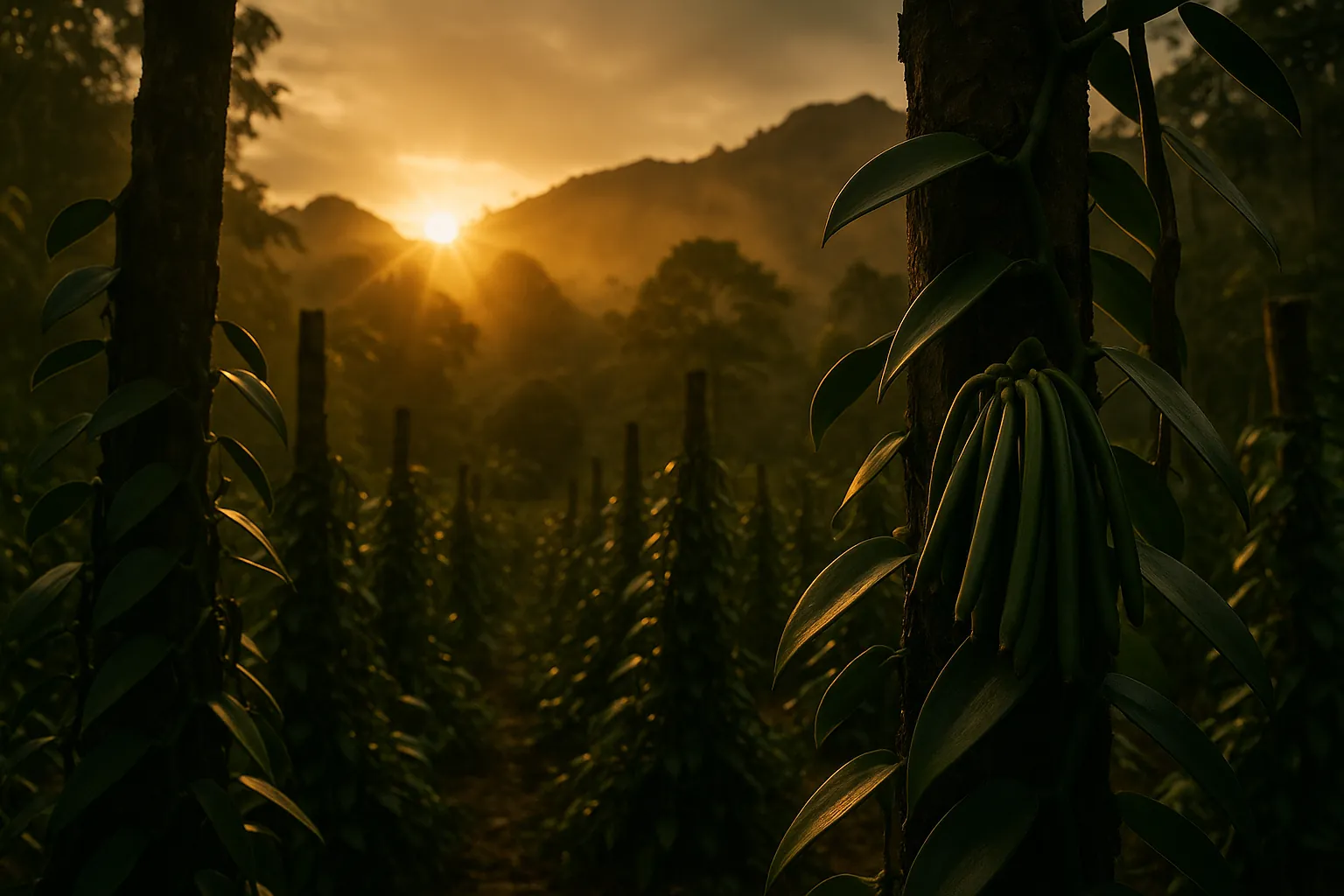

- Vanilla imports are kilogram-scale: a 10 kg trial order runs the entire workflow — sample, contract, freight, customs, arrival checks — with modest capital at risk.
- The workflow has seven steps: define the lot, sample with lab data, agree the specification in writing, structure payment, book freight and documents, clear customs, verify the delivered lot.
- Never buy vanilla from photographs — insist on a sample drawn from the actual lot on offer, with that lot's vanillin and moisture assay.
- Specify moisture 30–35% for gourmet or 20–25% for extraction, with the vanillin range and lab method named in the contract.
- The standard document pack: commercial invoice, packing list with lot numbers, certificate of origin, phytosanitary certificate, independent lab report, transport document.
- Madagascar lots ship via Toamasina port or Antananarivo airport; Uganda lots route via Mombasa or fly ex-Entebbe.
Importing vanilla is more approachable than importing most agricultural commodities — the volumes are small, the freight is simple, and there are no container-scale commitments to make on a first order. What it demands instead is specification discipline: vanilla's price range is so wide, and quality so variable, that a loosely specified order is an invitation to disappointment. This guide walks the seven steps we take buyers through, whether they are ordering 10 kilograms or a tonne.
Step 1: Define the lot — grade, origin, volume
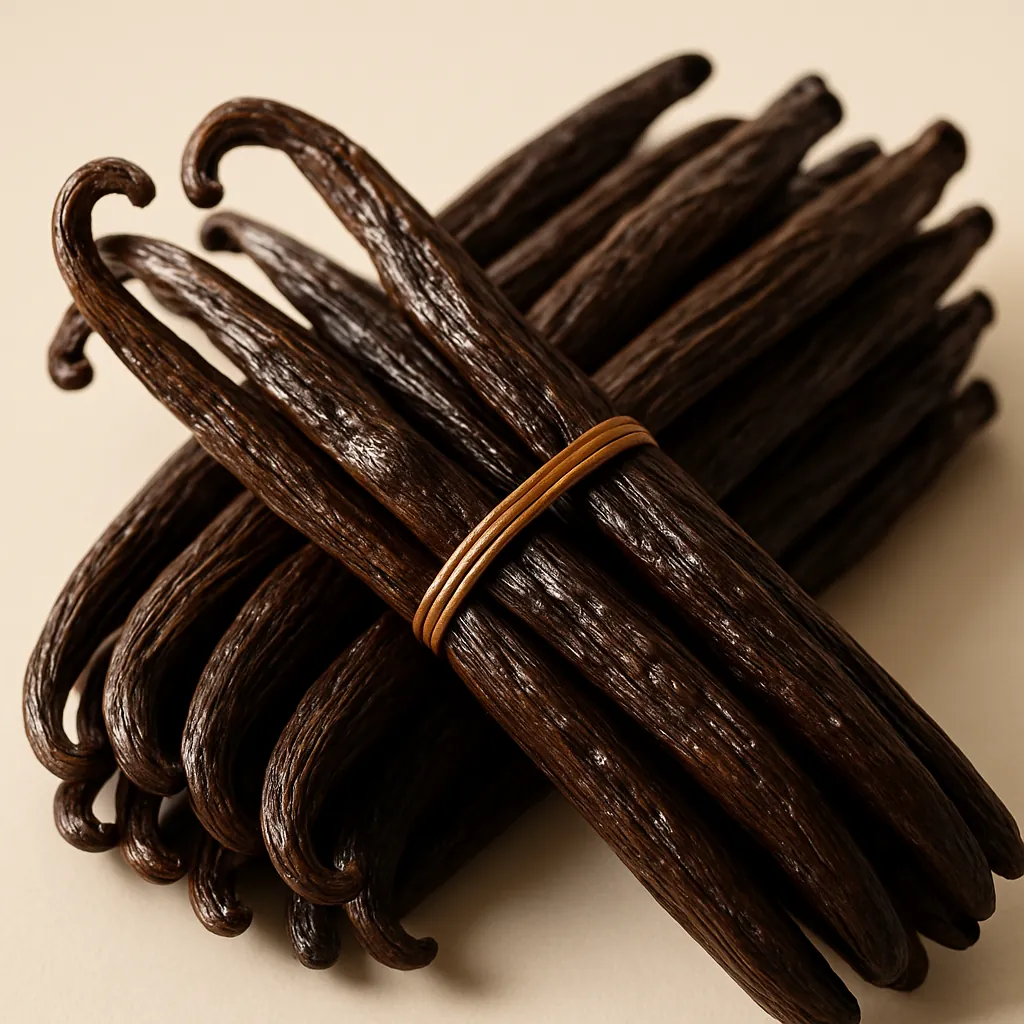
Decide what the beans are for before you ask for a price. Retail presentation and pastry work call for Grade A gourmet (choose your length calibre — 16–18 cm standard, 18–20 cm premium). Extract production calls for Grade B, priced on vanillin. Origin matters too: Madagascar for the classic Bourbon profile and the widest calibre choice, Uganda for high vanillin and harvest continuity. State your volume in kilograms and whether it is a one-off or the start of a programme — programme buyers get better allocations from the new cure.
Step 2: Request samples with lab data
Never buy vanilla from photographs. A serious supplier sends a representative sample drawn from the actual lot on offer, accompanied by that lot's vanillin and moisture assay. Evaluate suppleness, aroma, seed density and uniformity — and have your own lab verify the numbers if the volume justifies it. Treat a supplier who cannot tie the sample to a specific lot number as a red flag.
Step 3: Agree the specification in writing
- Grade, origin district and harvest/cure season.
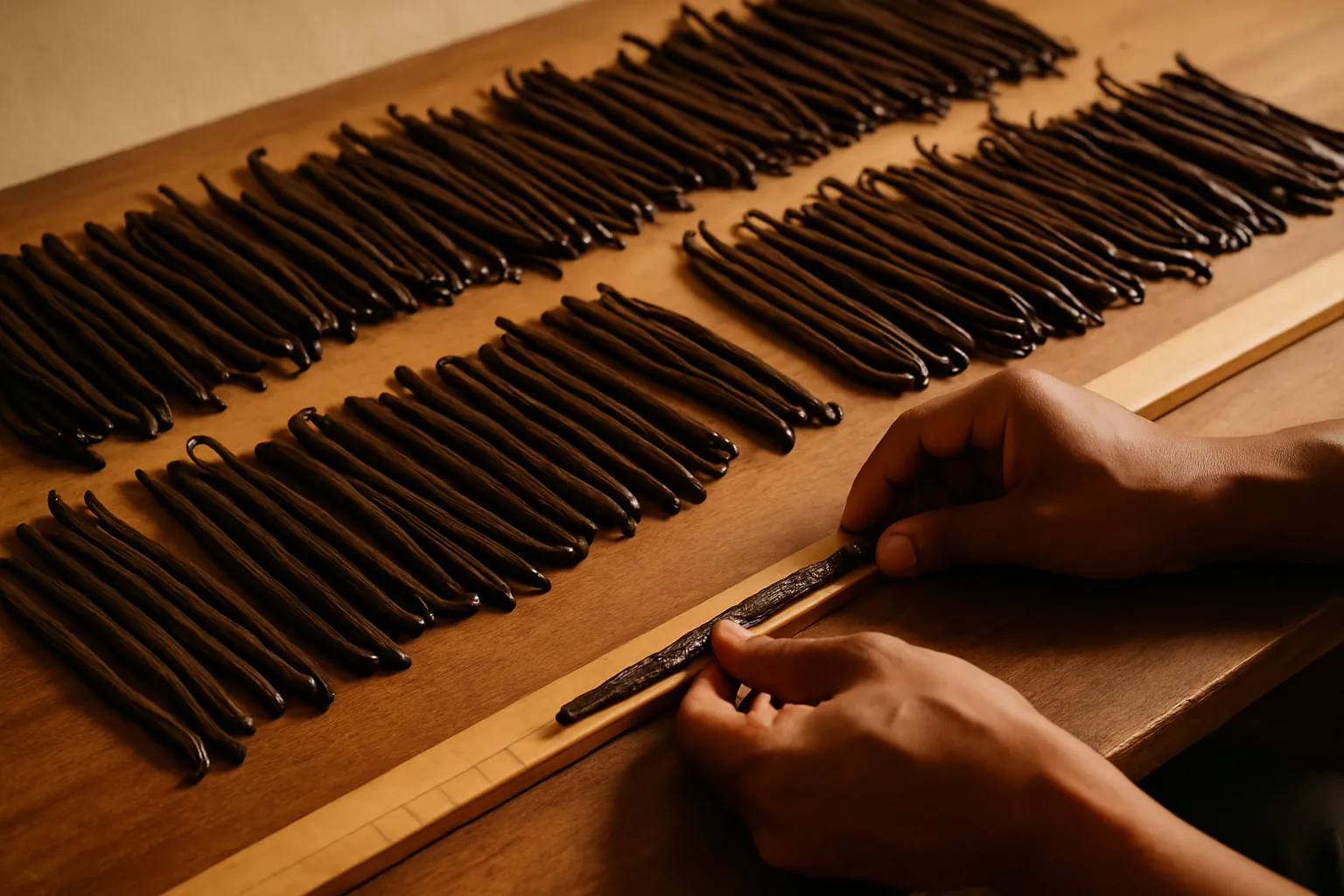
- Length band and tolerance (e.g. 16–18 cm, max 5% under-length).
- Moisture band (30–35% gourmet / 20–25% extraction) and vanillin range, with the lab method named.
- Condition tolerances — splits, cuts and blemished beans allowed per kilogram.
- Packaging format, Incoterm and shipment window.
Step 4: Structure payment sensibly
For kilogram-scale first orders, full or majority payment by telegraphic transfer before despatch is standard practice. For larger contracts, a deposit at signing with balance against shipping documents — or a Letter of Credit at sight for pallet-scale programmes — protects both sides. Be wary of any structure that asks you to pay significant sums before you have seen a lot-tied sample and its lab report.
Step 5: Book freight and confirm the document pack
Agree the mode — air for speed and small volumes, LCL sea for pallet-scale — and confirm the document set before despatch: commercial invoice, packing list with lot numbers, certificate of origin, phytosanitary certificate from the origin authority, the vanillin and moisture lab report, and the transport document. Madagascar lots ship via Toamasina port or Antananarivo airport; Uganda lots route via Mombasa or fly ex-Entebbe.
Step 6: Clear customs against your market's food rules
Vanilla is a low-drama import in most jurisdictions, but know your market's requirements. US buyers file FDA Prior Notice and need the importer's food facility registration in order. EU buyers should confirm standard food-import controls at their port of entry and keep the phytosanitary certificate accessible. Gulf importers typically need attested certificates of origin. Your customs broker handles the mechanics — your job is to make sure the document pack we send matches what your jurisdiction expects, which we confirm at contract.
Step 7: Verify the delivered lot
On arrival, inspect promptly: check vacuum integrity across a sample of pouches, verify lengths and condition against the contract tolerances, and — for extraction programmes — run your own vanillin assay against the shipped lab report. Raise any deviation with the lot number in hand while the packaging evidence is fresh. With a single-origin supplier, that lot number resolves to a specific curing batch and record file, which is what makes claims rare and resolutions fast.
“The buyers who do well in vanilla are not the ones who negotiate hardest on price — they are the ones whose specification, sample and lab report all describe the same bean.”
- Joachim Mbwana, Sourcing Lead
One structural advantage worth underlining: vanilla's kilogram-scale economics make the qualification process cheap. A 10 kg trial order lets you run the entire workflow — sample, contract, freight, customs, arrival verification — with modest capital at risk, before committing to programme volume. We encourage exactly that path, because a buyer who has tested our lot discipline at 10 kg orders differently at 500.
First order or fifth programme, the workflow is the same — and we run it with you from the first enquiry. Tell us your grade, volume and destination, and we will come back with availability, a lot-tied sample plan and indicative pricing within one business day.
Related reading and products
- Wholesale vanilla beans supplier overview- grades, origins, MOQ and shipping in one place
- Vanilla bean grades explained- Get the specification right first
- Packing & shipping vanilla beans- Freight, temperature and documents in depth
- Madagascar Grade A gourmet beans- The place most programmes start
- Vanilla price trends in 2026- What a fair quote looks like this season
Related reading
Leave a Comment
Your email address will not be published.