
At a glance
- Bourbon vanilla is an origin designation — Vanilla planifolia grown and cured in the islands of the south-west Indian Ocean. It is not a variety, a flavour or an added ingredient.
- It has nothing to do with bourbon whiskey. Both names descend from the French House of Bourbon; the two products share no ingredient, process or history.
- The name comes from Île Bourbon, the island now called Réunion, where the Indian Ocean curing method was worked out in the nineteenth century.
- The island origins are Madagascar, the Comoros and Réunion. Madagascar's Sava region supplies the great majority of the world's Bourbon beans.
- Uganda grows the same cultivar and cures it the same way on the mainland, so the trade calls it Bourbon-type rather than Bourbon.
- Bourbon is not a grade. A Bourbon bean can be Grade A gourmet at 30–35% moisture or Grade B extraction at 20–25%.
- A cured bean contains no alcohol. The alcohol in vanilla extract is the solvent, added long after the bean leaves origin.
- Our range is Bourbon across all three of our origins — Madagascar, the Comoros, and Bourbon-type Uganda.
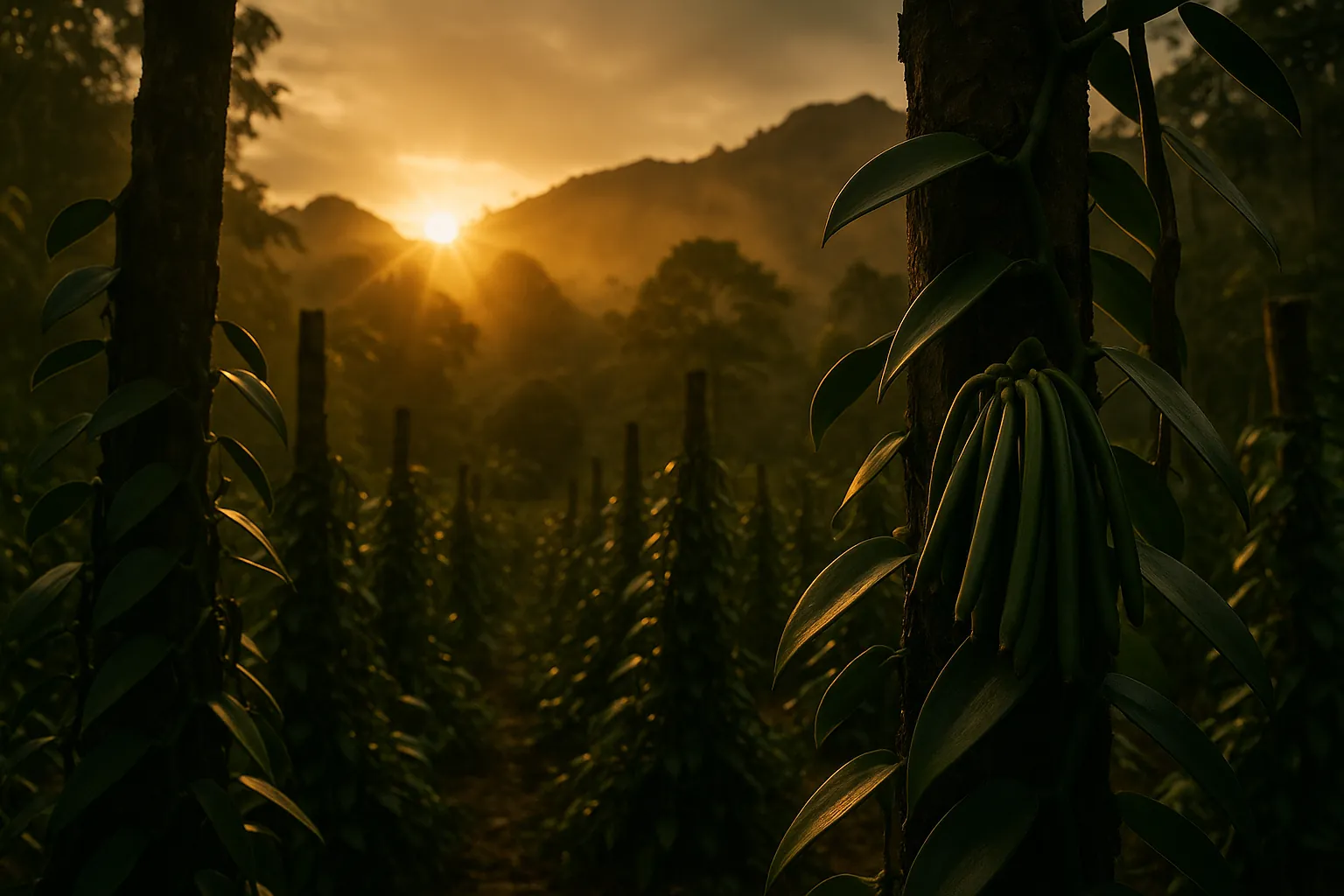
Bourbon vanilla is a place, not a flavour. The term describes Vanilla planifolia grown and cured in the islands of the south-west Indian Ocean — Madagascar above all, with the Comoros and Réunion alongside it — and it takes its name from Île Bourbon, the island the French renamed Réunion after the Revolution. Nothing is added to a Bourbon bean and nothing is done to it that would make it a different plant. The word works the way Champagne or Bordeaux works: it is a region before it is anything else.
Almost everything buyers get wrong about Bourbon vanilla starts with treating it as a description of taste rather than of place. What follows is what the word covers, what it excludes, and where the honest grey area sits — which is Uganda.
Is Bourbon vanilla made with bourbon whiskey?
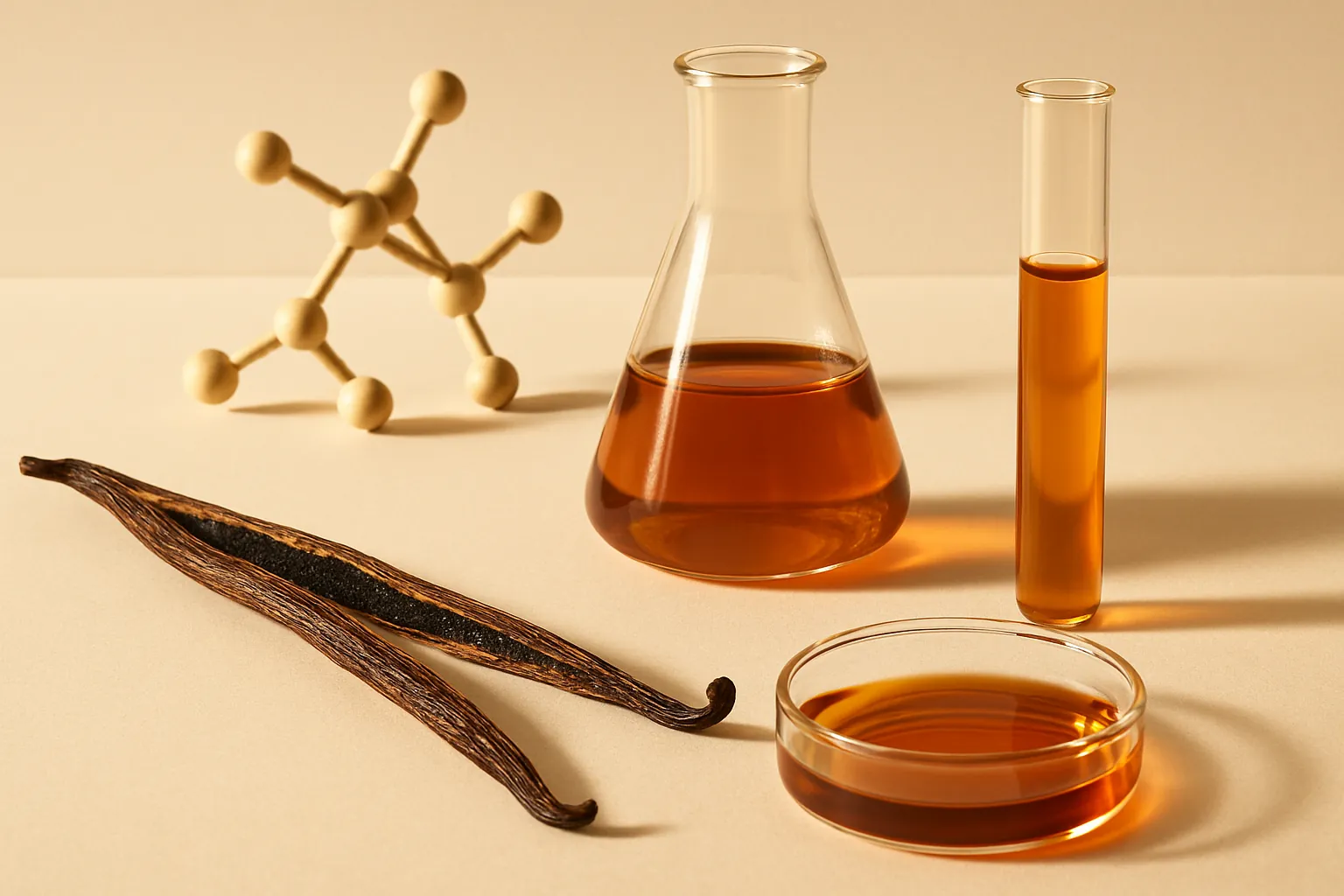
No. There is no whiskey in it, no barrel ageing, no distilling connection of any kind, and this is comfortably the most common question we field from first-time buyers. The two words are the same by coincidence of French royal history: Île Bourbon in the Indian Ocean and Bourbon County in Kentucky were both named after the House of Bourbon, and each lent its name to a product centuries later. The vanilla and the whiskey never met.
Bourbon-flavoured vanilla products do exist — ice creams and syrups that genuinely pair the two — but that is a recipe, not a grade. When Bourbon appears on a bag of whole beans or on an exporter's specification sheet, it is telling you where the beans came from.
Where does the name Bourbon come from?
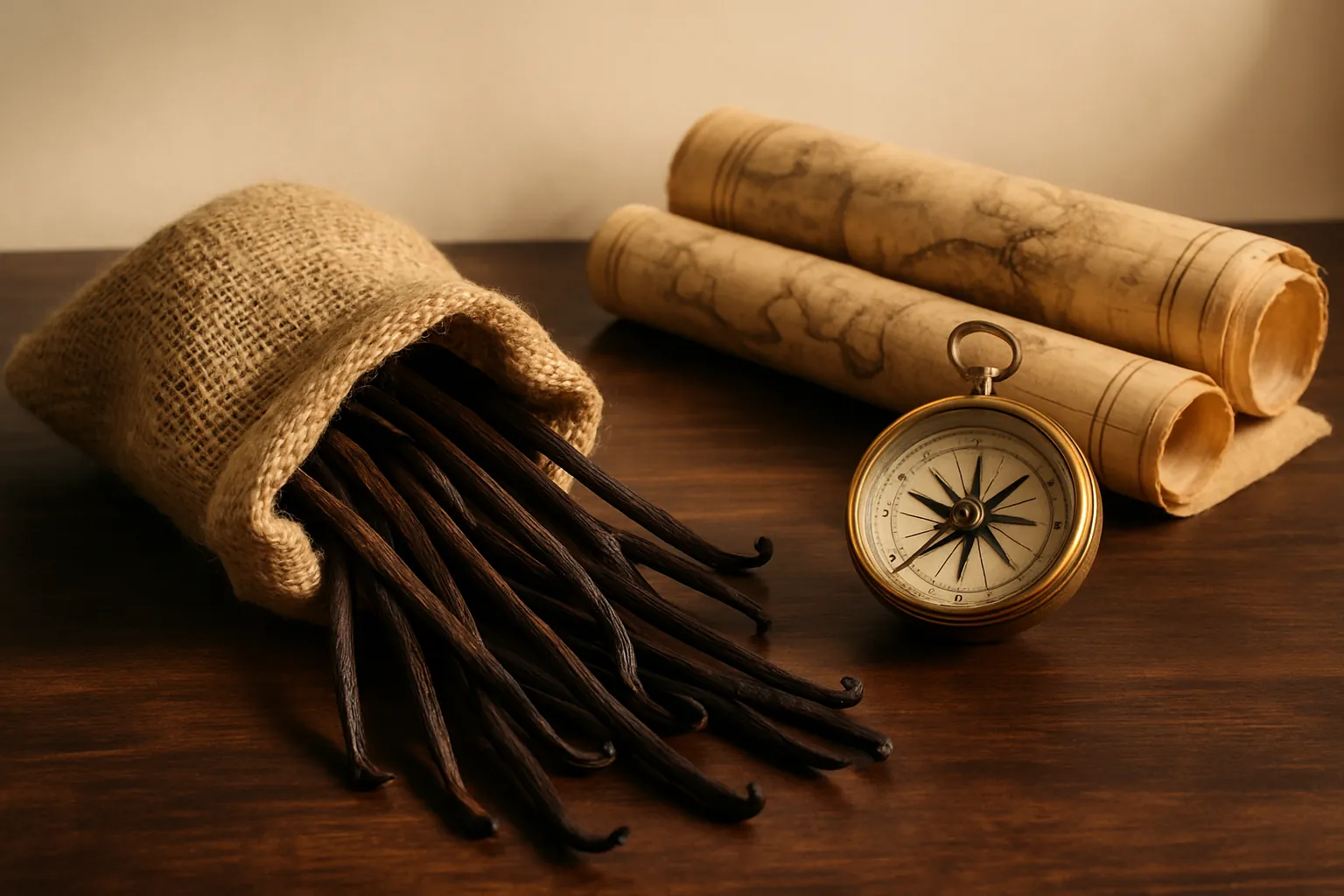
Vanilla is native to Mesoamerica, and for three centuries after Europeans first carried it home the vines flowered everywhere and fruited nowhere, because the orchid's natural pollinator did not travel with it. Hand-pollination solved that, and the technique that scaled is credited to Edmond Albius on Île Bourbon in 1841. Once every flower could be set by hand, the island planters could finally grow vanilla commercially — and they developed the four-stage cure that goes with it.
The method spread to Madagascar and the Comoros, and the beans took the island's name with them. So Bourbon carries two things at once: a geography and a curing tradition. That is why the term outlived Réunion's own significance as a producer, and why it means something specific rather than merely sounding expensive.
Which countries produce Bourbon vanilla?
- Madagascar — the dominant origin by a wide margin. The Sava region in the north-east, around Antalaha, Sambava and Vohémar, is the world's principal Bourbon growing area and the reference against which the trade calibrates.
- The Comoros — Anjouan, Mohéli and Grande Comore, inside the historic Bourbon belt, producing small artisanal volumes with a soft, rounded profile.
- Réunion — the original Île Bourbon. It still grows vanilla, but today's output is small and largely absorbed locally and at premium prices rather than moving in wholesale trade.
- Uganda — same cultivar, same cure, mainland East Africa. The trade calls it Bourbon-type, and the distinction is worth understanding rather than glossing over.
We buy from three of those four: Madagascar, the Comoros and Uganda. How they compare on flavour, vanillin, calibre, calendar and price is a longer conversation, and we set it out in full in our three-origin comparison linked below. What matters here is that all three sit inside or immediately alongside the Bourbon tradition.
Is Ugandan vanilla really Bourbon?
Strictly read, no — and we would rather say that plainly than let a buyer discover it from a customer complaint. Bourbon names an island group in the south-west Indian Ocean. Uganda is mainland East Africa, and its vanilla industry is modern rather than colonial, so it falls outside the appellation as the name was originally drawn.
Commercially the picture is more useful than that sentence suggests. Uganda grows the same species, Vanilla planifolia, and cures it the same Bourbon way, which is why the trade sells it as Bourbon-type and why it behaves like a Bourbon bean in a kitchen or a maceration tank. Our Ugandan gourmet lots run 15–18 cm at 1.8–2.2% vanillin, and the extraction grades reach 2.0–2.6% — the highest assays in our catalogue.
So the practical rule is this. If you are buying for flavour, vanillin yield or harvest continuity, the distinction changes nothing you would notice. If your packaging leans on the word Bourbon, it changes what you are allowed to print. Every lot we ship names its country and district on the paperwork, so that decision stays yours and stays informed.
What does Bourbon vanilla taste like?
Creamy, sweet, rounded and faintly rum-like — and, more to the point, familiar. Bourbon vanilla is the profile most people mean when they say vanilla: the taste built into consumer expectation across ice cream, custard and patisserie, and the reference flavour houses calibrate against. A buyer who specifies Bourbon is usually protecting a recipe designed around exactly that profile.
Within the tradition there is real variation — Madagascar creamy and sweet, Uganda bolder and darker, the Comoros gentlest of the three at 1.4–2.0% vanillin. None of that is set by vanillin alone: a cured bean carries hundreds of aroma compounds, and the balance among them is built during the cure rather than fixed at planting.
How does Bourbon vanilla differ from Tahitian and Mexican vanilla?
Tahitian vanilla is a different species altogether — Vanilla tahitensis rather than planifolia. It is markedly more floral, with anisic and cherry-like notes, and it typically assays lower in vanillin than a Bourbon bean. That makes it a specialist choice for uncooked and delicate applications where vanilla is the lead note rather than the backdrop. It is not a stronger or weaker Bourbon; it is a different plant, and swapping one for the other changes a finished product noticeably.
Mexican vanilla is the same species as Bourbon, grown where the plant originated, but the terroir and curing traditions differ and the profile is usually described as spicier and smokier. Neither Tahitian nor Mexican vanilla is Bourbon, and neither is in our range. We mention them because Bourbon is sometimes used loosely as a synonym for good vanilla — and a buyer comparing quotes deserves to know the word is doing precise work.
Is Bourbon a grade?
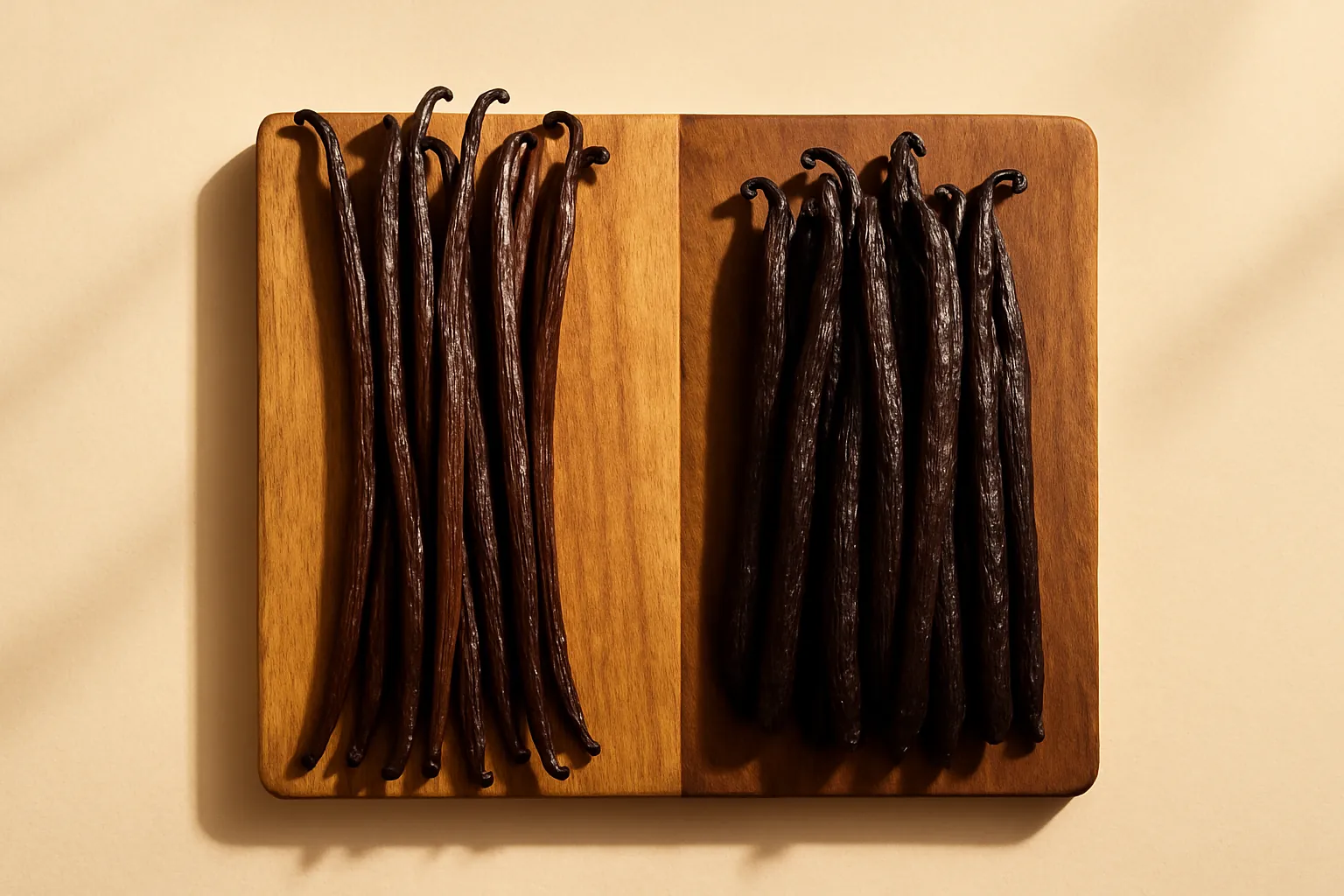
No, and conflating the two is the fastest way to write a specification that cannot be enforced. Origin and grade are independent axes. A Bourbon bean can be Grade A gourmet — whole, supple, oily, cured to 30–35% moisture — or Grade B extraction at 20–25% with the blemishes a drier cure brings. Our Madagascar gourmet line runs 16–18 cm at 1.6–2.4% vanillin; the same origin's extraction beans are a different product, bought on the assay rather than the appearance.
“Bourbon tells you where a bean is from and how it was cured. It does not tell you how long it is, how wet it is, or how much vanillin it carries. Those three numbers are the contract.”
- Joachim Mbwana, Sourcing Lead
Why do buyers specify Bourbon vanilla?
- Label language — Bourbon is a claim consumers recognise and pay attention to, so brands that have earned it want to keep it accurate.
- Formulation consistency — the classic creamy profile is what most recipes were developed around, and a species substitution shows up in the finished product.
- Sourcing discipline — asking for Bourbon forces a supplier to name a country and a district, which is the first question a traceable supply chain has to answer anyway.
How do you make the Bourbon claim enforceable?
Write the word Bourbon into a contract on its own and you have specified almost nothing. Back it with the species and the growing district — Vanilla planifolia, Sava region of Madagascar — and it becomes a claim a document pack can support. Then add the grade and the three numbers that describe the bean itself: our full six-point specification checklist is in the grades guide linked below.
Every lot we ship is single-origin, tied to its district and curing window, and lab-tested at origin for vanillin and moisture before it is priced. That is what lets us put Bourbon on a specification and back it with a paper trail rather than a reputation. Our range is Bourbon across all three of our origins — the Madagascar and Comoros lots inside the historic appellation, the Ugandan lots as Bourbon-type, named as such on every set of papers that travels with them.
Bourbon vanilla from our three origins, and related reading
- Madagascar Grade A gourmet vanilla beans- Sava region · 16–18 cm · 1.6–2.4% vanillin
- Uganda Grade A gourmet vanilla beans- Bourbon-type · 15–18 cm · two harvests a year
- Comoros Bourbon vanilla beans- Island lots · 14–18 cm · 1.4–2.0% vanillin
- Madagascar vs Uganda vs Comoros compared- The three origins, side by side
- Vanilla bean grades explained- Why Bourbon is not a grade
- Request lot-tied samples- Named origin, lab report attached
Related reading
Leave a Comment
Your email address will not be published.