
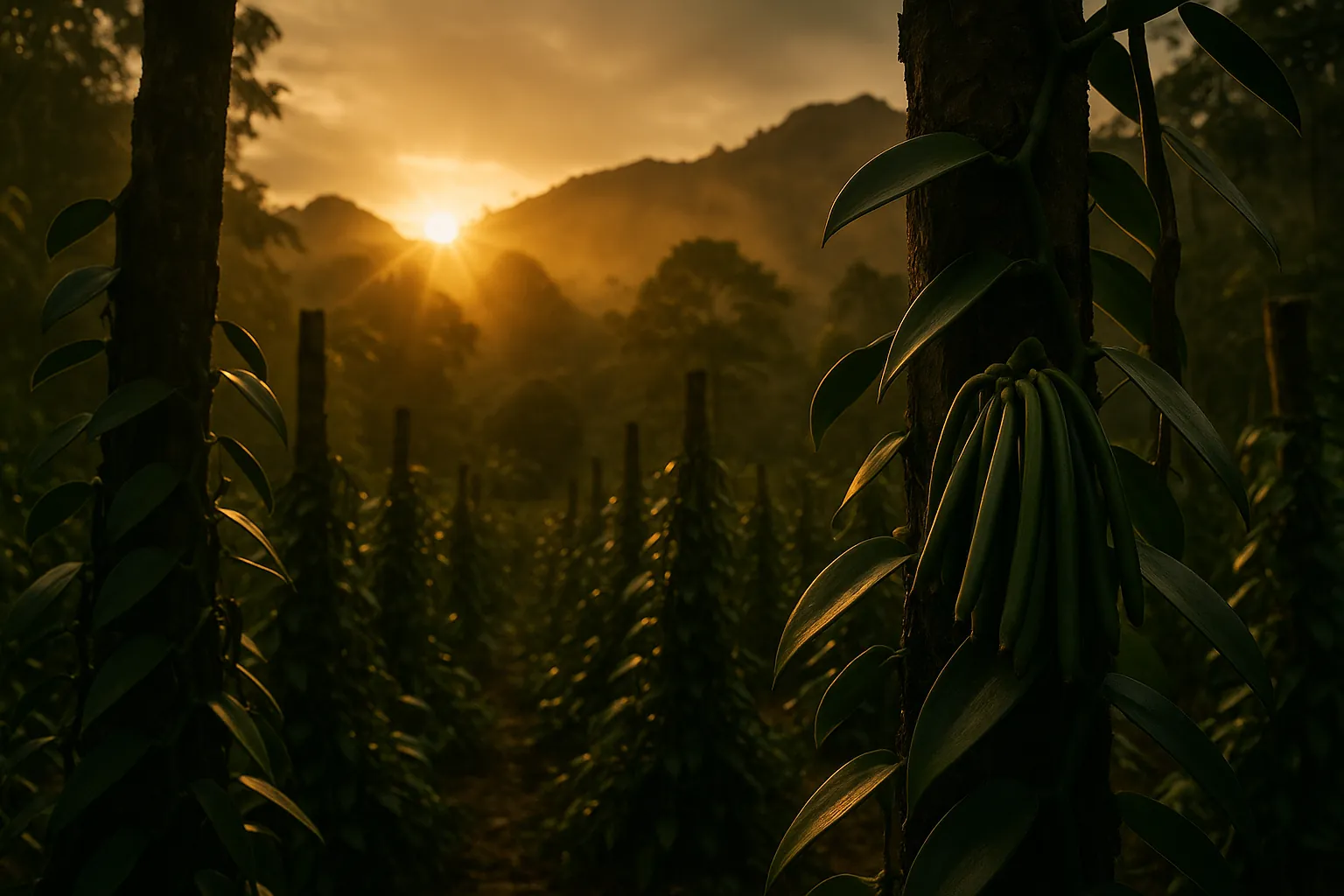
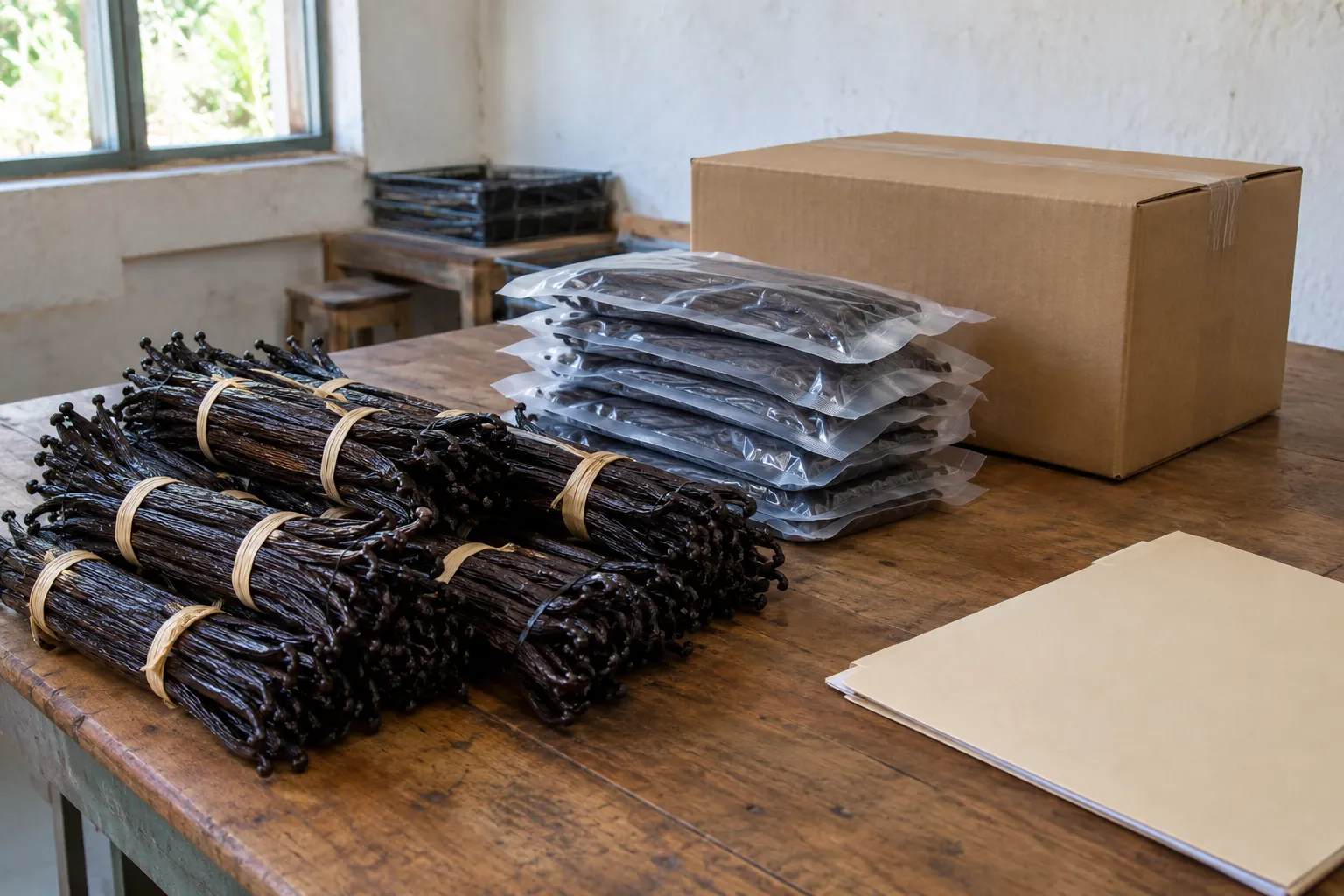
Madagascar's 2026–27 vanilla export campaign is at the exporter-approval stage. On 19 October 2026 the Ministry of Commerce and Consumption (MinCC) published a first list of 141 operators approved to export vanilla for the campaign, and told them to collect their certificates from 21 October. Four days earlier the ministry had moved the application deadline for vanilla and clove exporters to 22 October 2026. As of 20 October we had found no officially published opening date for cured-vanilla shipments. The practical rule for a buyer: contract a Madagascar lot only with, or through, an exporter that holds a 2026–27 approval, and tie the shipment window to it.
What has been announced so far?
- 29 May 2026 — an interministerial order, no. 18280/2026, opened the 2026–27 green vanilla campaign. The notice we found names the Sofia, Diana and Anosy regions and says the aim is harvesting at proper maturity.
- 16 June 2026 — press reports described a proposal by the Alliance de la Vanille Malgache to buy back about 600 tonnes of cured vanilla, with exporters expected to buy around 3,000 tonnes of green vanilla from producers in Diana and Sofia. The report presented this as a proposal still awaiting a call for expressions of interest.
- 4 July 2026 — the ministry extended the previous export campaign to the end of August to help clear stocks, citing a persistent imbalance between supply and demand, and extended the validity of exporter approvals to two years.
- 26 September 2026 — applications opened for 2026–27 vanilla export approvals, filed through the ministry's ALALANA digital platform.
- 15 October 2026 — the application deadline for vanilla and clove exporters was postponed to 22 October 2026, which the ministry linked to the move to digital filing.
- 19 October 2026 — the first list of 141 approved vanilla exporters was published, with certificates available from 21 October.
Two things were not in what we read. We found no official opening date for cured-vanilla exports under the new campaign, and we did not see the regional order text for the Sava region, where most Madagascar export beans are grown. Ask your supplier which regional order covers the lot's district and when the exporter expects to ship.
Why does the approval list matter to a buyer?
The approval decides who can put a Madagascar lot on a ship or a plane. The ministry has said the export approval certificate is issued only after the list of approved exporters is published, so an offer from a company that is not on the list, or is still waiting to be added, carries a timing risk that a price comparison will not show. The list is also a first list. An exporter missing from it today may appear on a later one.
Some offers come through traders and brokers rather than directly from the exporter of record. That adds a question: whose name will be on the export documents? Get that name before you pay a deposit, and check it against the published list.
What does the stock situation mean for the lot you buy?
The July extension was explicitly about clearing stocks, and the June buyback proposal was about the same problem. For a buyer, that means cured beans from earlier campaigns are likely to sit alongside the new cure in this season's offers. Older stock is not automatically worse. Well-conditioned, vacuum-packed beans can hold quality past a single season. But a carried lot can dry out further or pick up storage faults such as mould, so it needs its own numbers.
- Ask for the curing window or crop year of the specific lot, not only the origin.
- Ask when the moisture and vanillin samples were drawn. A result from last season describes last season's bean.
- For gourmet lots, check suppleness and surface condition on a sample from the actual lot; for extraction lots, compare assayed vanillin with the moisture result together.
- If the offer is for new cure, ask when the exporter expects it to reach shipping condition, and put that window in the contract.
What should a 2026–27 Madagascar contract name?
- The exporter of record, as it appears on the ministry's approved list for the 2026–27 campaign.
- The origin district and the lot's curing window.
- Grade, length band, moisture band and vanillin range, with the lab method and sample date.
- Packing format, named Incoterm, transport mode and shipment window.
- What happens if the exporter's approval or the export window slips: a revised date, a substitute lot with new assays, or cancellation without penalty.
Where do Uganda and the Comoros fit?
Madagascar's approval process covers Madagascar exports only. Our Ugandan lots come from Bundibugyo and Mukono and our Comoros lots from the islands, each on its own calendar and under its own export rules. If a Madagascar shipment window slips, a Ugandan extraction lot can be a reasonable comparison for processing use, provided it is named as Ugandan on the label and paperwork and judged on its own assays. Uganda is mainland East Africa, so it is not a Bourbon-origin substitute where a label promises Bourbon.
How we handle a Madagascar enquiry this season
Tell our export desk the grade, quantity, destination and intended use. We will come back with a named lot, its moisture and vanillin results with the sample date, and the shipment window we can confirm. We do not publish prices; a quote is tied to the lot and dated. If a question about the campaign rules affects your order, ask it before contracting, and we will answer from the ministry's published notices rather than from market talk.
Plan a Madagascar order this season
- Wholesale vanilla beans supplier overview- grades, origins, MOQ and shipping in one place
- Madagascar Grade A gourmet beans- Sava region · 16–18 cm · 30–35% moisture
- Madagascar Grade B extraction beans- 14–16 cm · bought on the vanillin assay
- Uganda Grade B extraction beans- A separate origin on its own calendar
- Vanilla price trends 2026- Compare cured lots, not headlines
- How to import vanilla beans- The seven-step buying workflow
- Madagascar's vanilla season, pollination to cure- Why new cure arrives months after harvest
- Request a lot-tied quote- Named lot, dated assays, confirmed window
Sources
- MinCC: first list of 141 approved vanilla exporters, 2026–27 (Malagasy)- Ministry of Commerce and Consumption, 19 October 2026
- MinCC: vanilla and clove export campaign 2026–27, deadline moved to 22 October- Ministry of Commerce and Consumption, 15 October 2026
- Newsmada: vanilla export approval applications open 26 September- Newsmada, 1 October 2026
- GEFP: export campaign extended to end of August, approvals valid two years- GEFP, 4 July 2026
- L'Express de Madagascar via AllAfrica: proposed 600-tonne buyback- AllAfrica, 16 June 2026
- Order no. 18280/2026 opening the 2026–27 green vanilla campaign- Notice published 29 May 2026
Related reading

Leave a Comment
Your email address will not be published.