
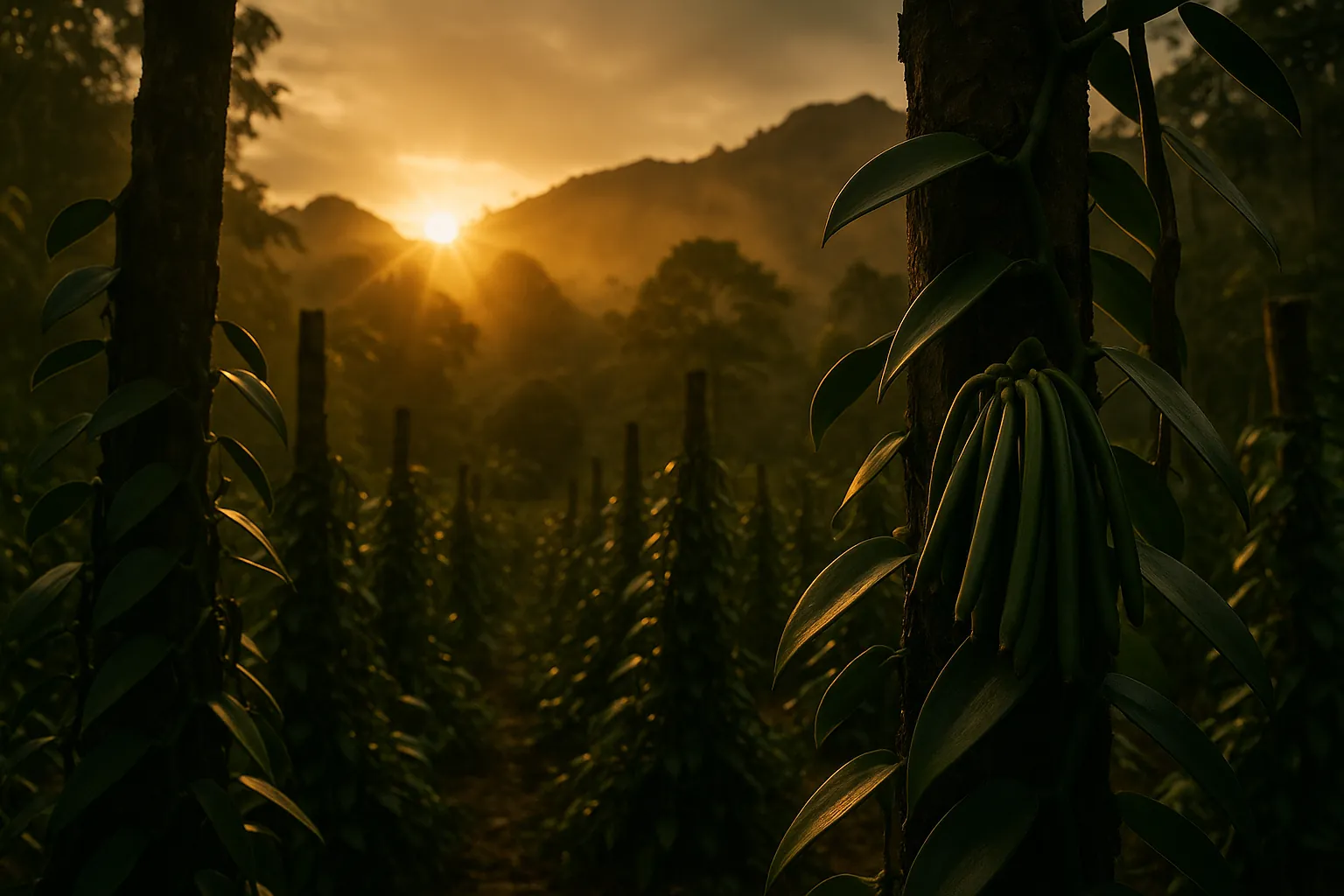
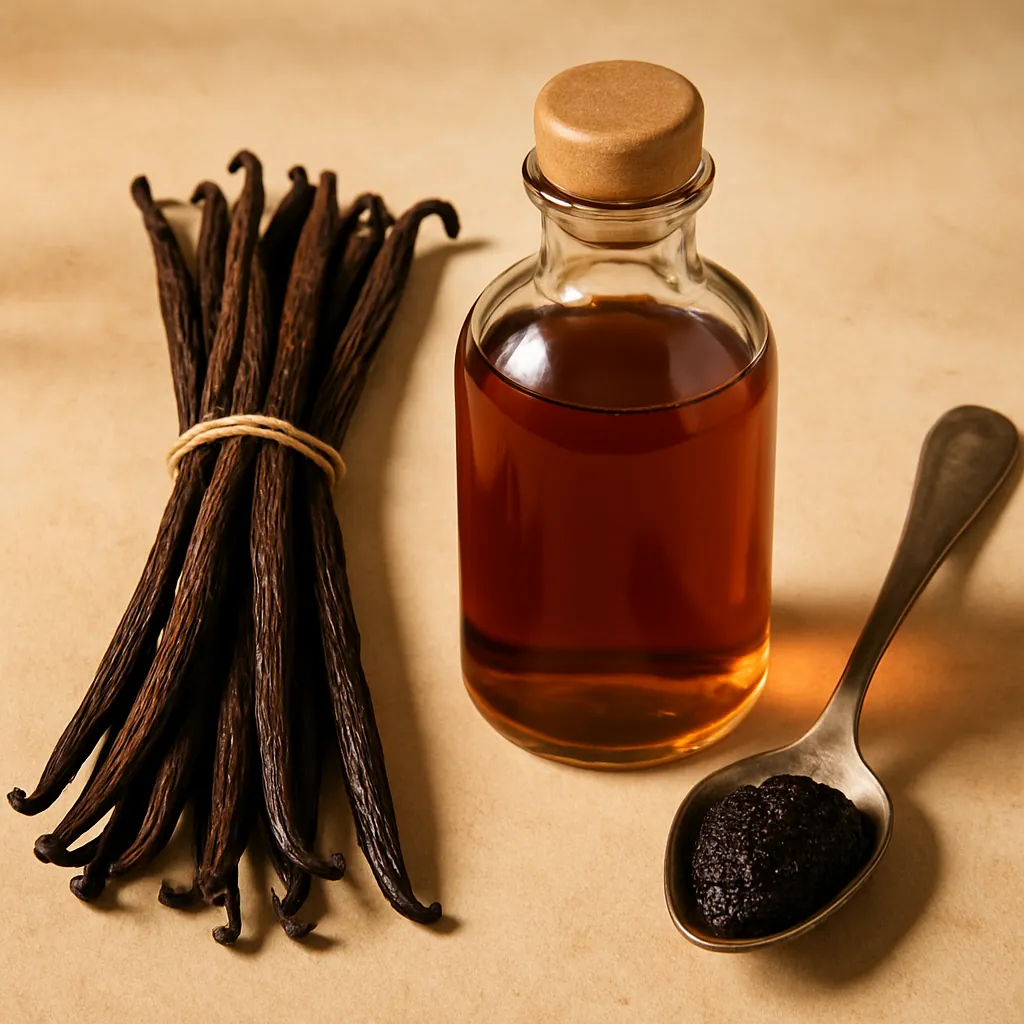
- It takes 5 to 6 kg of green vanilla pods to produce 1 kg of cured beans — the largest single multiplier in every cured-bean quote.
- A vanilla vine needs roughly three to four years from planting to first commercial harvest, so supply answers price years late — the engine of vanilla's boom-and-bust cycles.
- Madagascar harvests once a year (green pods June–September, new cure from November); Uganda harvests twice, cushioning the calendar.
- Extraction beans increasingly price per kilogram of vanillin delivered: a 2.4% assay carries half as much again flavour per kilo as a 1.6% assay.
- Grade A gourmet earns a premium on appearance, suppleness and calibre; Grade B extraction is priced on the assay, not the looks.
- Uganda typically trades at a discount to Madagascar on comparable lab numbers — market structure, not a quality verdict.
- Freight is a minor share of delivered cost: vacuum-packed kilograms move by air or LCL sea, not container loads.
Bourbon vanilla prices are set by six mechanical factors: the harvest cycle, the curing yield, vanillin content, the Grade A–Grade B spread, the origin differential between Madagascar and Uganda, and packing and freight mode. These mechanics hold in any season — for where the market actually stands this year, see our 2026 price-trends review, linked below. This article explains the machinery, because a buyer who can see the six factors inside a quote knows which one they are really negotiating.
Why does the harvest cycle dominate vanilla prices?
Because supply is fixed months — and in planting terms, years — before demand meets it. Madagascar's single annual harvest sets most of the world's supply in one window, and a vine planted in response to high prices bears nothing for roughly three to four years.
That lag is the engine of vanilla's famous cycles: shortage lifts prices for years, growers plant heavily, the new supply arrives all at once, and prices overshoot on the way down. Weather compounds the effect — the Sava region sits in a cyclone corridor, so forward contracts written between January and March typically carry a weather premium. None of this makes prices predictable, but it makes them legible: know where the crop calendar stands and you know where the pressure points sit.
How does the 5–6:1 curing yield set the cost floor?
Every kilogram of cured vanilla starts as 5 to 6 kilograms of green pods, so the honest minimum cost of a cured bean is roughly five to six times the green farm-gate price, plus three to six months of skilled curing labour.
That arithmetic is a buyer's best defence against too-good quotes. When cured beans are offered near or below the green-cost multiple, the difference has come from somewhere — usually moisture. An under-cured bean carries more water, which flatters the per-kilogram price while diluting flavour and raising mould risk. The trade treats the 5–6:1 ratio as a law of the cure; a quote that appears to beat it deserves questions, not celebration.
Why does vanillin content carry a premium?
Because extraction buyers do not really buy beans — they buy vanillin by the kilogram. A lot assaying 2.4% delivers half as much again flavour per kilo as a lot at 1.6%, so it can trade meaningfully higher per kilogram and still make cheaper extract.
This is the quiet repricing of the extraction market: quotes compared on delivered vanillin rather than sticker price. It rewards full cures and independent assays and penalises wet, rushed lots — which is why every extraction lot we ship carries an HPLC vanillin and moisture report, and why we encourage buyers to run the vanillin-per-dollar arithmetic on our quotes and our competitors' alike.
What sets the Grade A versus Grade B spread?
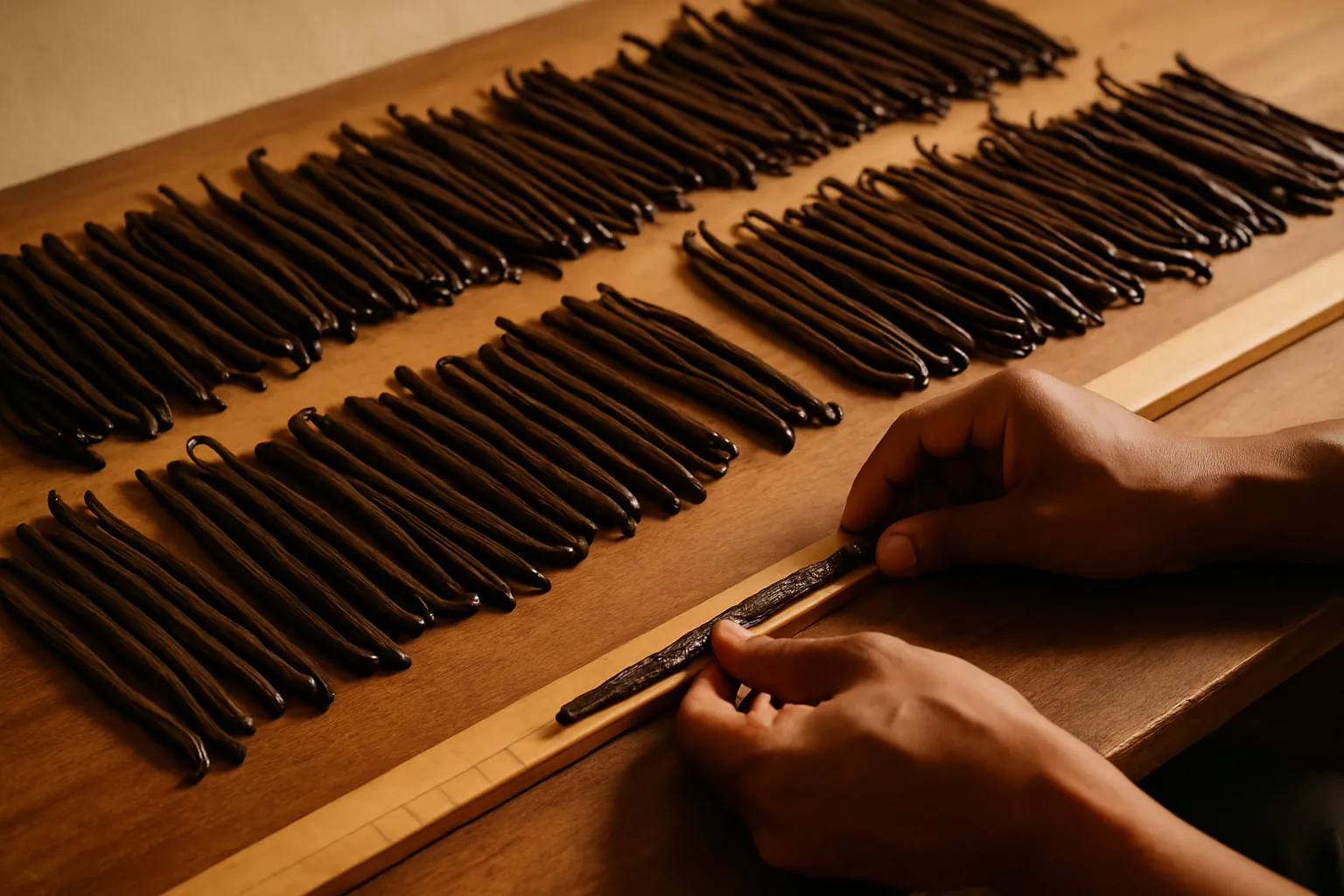
Grade A gourmet earns its premium on appearance, suppleness and calibre — the things a retail tube or a pastry menu pays for. Grade B extraction forgoes the beauty premium and is priced on flavour per kilogram.
The spread between them moves with the demand mix: strong retail and food-service demand widens it, because long, supple 16–20 cm beans are scarce within any harvest, while extract-led demand narrows it. There is also a moisture asymmetry inside the spread — a gourmet bean at 30–35% moisture carries more water per kilogram than an extraction bean at 20–25%, so part of the gourmet price is, quite literally, water, paid for the texture it preserves.
Why does Madagascar trade above Uganda?
Brand, habit and risk — not lab numbers. Madagascar carries the weight of the Bourbon reputation, decades of buyer habit and, in risky months, a cyclone premium; a Ugandan lot matching a Malagasy lot on vanillin, moisture and cure quality still usually trades at a discount.
What a buyer does with that differential depends entirely on the label. Products that never name an origin — most extract and industrial flavour work — can capture the discount at no sensory cost. Products that say Madagascar on the front cannot. We compare the two origins in depth in our Madagascar vs Uganda guide, linked below; the short version is that the gap prices the name, not the bean.
How much do packing and freight add to the price?
Less than most first-time buyers expect. Vacuum-packed vanilla moves by air for orders up to a few hundred kilograms and by LCL sea for pallet-scale programmes, and for gourmet grades the freight line is typically a low single-digit share of delivered cost. The mode choice is about care rather than money — air means days in transit and minimal temperature exposure, sea means 25 to 40 days at a lower per-kilo rate that matters mainly for extraction volume. What deserves a buyer's attention is not the freight quote but the routing discipline behind it: no refrigeration, no long tarmac exposure, stowage away from heat.
“A vanilla quote is six numbers wearing one price tag. Buyers who can see the six — calendar, yield, assay, grade, origin, freight — negotiate on substance. Everyone else negotiates on hope.”
- Joachim Mbwana, Sourcing Lead
None of these factors needs insider access — they are visible in the crop calendar, the lab report and the packing list. We quote FOB origin with the lot's assay attached, so every one of the six is on paper before you commit a dollar.
Related reading and products
- Vanilla price trends in 2026- Where the market stands this season
- Vanilla flavour chemistry for buyers- What vanillin measures — and misses
- Madagascar vs Uganda vanilla- The origin differential in depth
- Madagascar Grade A gourmet beans- The benchmark the market prices from
- Uganda Grade B extraction beans- High assay at the origin discount
Related reading

Leave a Comment
Your email address will not be published.